Showing posts with label historian. Show all posts

Thursday, February 27, 2014

Reverend Dr Cain Hope Felder...Minister,Educator,Historian,Theologian,Author

image
image
image
True to Our Native Land
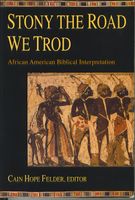
Cain Hope Felder is Professor of New Testament Language & Literature and Editor of The Journal of Religious Thought and Chair of the Academic Standing and Doctoral Programs committees at the Howard University School of Divinity in Washington, DC. His listing of accomplishments is equally remarkable. Some of his publications include the first African American New Testament Commentary True to Our Native Land (Augsburg Fortress, 2007); Troubling Biblical Waters: Race, Class, and Family (Orbis Books, 1989)-18th printing; Editor, Stony the Road We Trod: African American Biblical Interpretation (Fortress Press, 1991)-14th printing;The Seasons of Lent: Proclamation Commentary (Fortress Press, 1991); The Original African Heritage Study Bible (Winston Derek, 1993); "Commentary on the Epistle of James" in The International Bible Commentary (Liturgical Press, 1998); Consulting Editor and Contributor, African American Jubilee Bible (New York: American Bible Society) 1999; and Co-Editor Jubilee Legacy Bible (Nashville: Townsend Press, (2000); Introduction and Critical Notes on the Epistle of James in the New Oxford Annotated Bible (2001); Epistle to Philemon in the New Interpreter’s Bible, Vol. XI, 2001; and Race, Racism and the Biblical Narratives (Fortress Press, 2002). Felder taught at Princeton Theological Seminary and was the first national director of the United Methodist Black Caucus. He is also founder of the Biblical Institute for Social Change, Washington, D.C. – an organization dedicated to inform, inspire, affirm and transform the Christian community through scholarship and research. This organization serves as a catalyst for a renewed interest in Biblical Interpretation in diverse quarters: prisons, half way houses, local churches, and campus ministry settings.

From 1969 to 1972, Dr. Felder worked as the first National Director of the United Methodist Black Caucus which was headquartered in Atlanta, Georgia. Originally ordained as an Elder in the United Methodist Church, he served as Pastor of Grace United Methodist Church in New York City (1975-1977). Currently, Rev. Felder now serves as an Elder in the Second Episcopal District of the African Methodist Episcopal Church where he has been appointed by Bishop Adam Jefferson Richardson as the Resident Biblical Scholar for the District. He is an active member of Hemingway Memorial AME Church, located in District Heights, MD.

From 1998 to 2001, Dr. Felder served as Chair of the Implementation Panel for the National Center for African American Heritage & Culture at Howard University. He has been on Howard's faculty since 1981, having come to Washington from Princeton Theological Seminary where he taught as a member of the Department of Biblical Studies (1978-1981). His educational background is extensive: Ph.D., M. Phil., Columbia University in Biblical Languages and Literature; Diploma of Theology, Oxford University, England; Master of Divinity, Union Theological Seminary, New York; BA in Philosophy and Classics, Howard University, Washington, DC; and Diploma, Boston Latin School.

Maintaining dual residences in Washington, DC and his home haven in Mobile, Alabama that he shares with his bride, Dr. Jewell, affectionately called “Dr. J.”, Dr. Felder is the proud father of one daughter, Miss Akidah Felder, a graduate of Spellman College and current dual Masters student at Johns Hopkins University in Baltimore, MD.

http://www.christianpost.com/news/interview-with-dr-cain-hope-felder-of-howard-university-7716/
http://www.divinity.howard.edu/2_faculty_felder.shtml

Thursday, February 20, 2014

W.E.B. Du Bois was a black civil rights activist, leader, Pan-Africanist, sociologist, educator, historian, writer, editor, poet, and scholar

W.E.B. Du BoisThe Souls of Black Folk
Black Reconstruction in America 1860-1880
William Edward Burghardt Du Bois was born on February 23, 1868 in Great Barrington, Massachusetts,in The United States. Du Bois grew up in a relatively tolerant and integrated community. After graduating from Harvard, where he was the first African American to earn a doctorate, he became a professor of history, sociology and economics at Atlanta University. Du Bois was one of the co-founders of the National Association for the Advancement of Colored People (NAACP) in 1909.
Du Bois rose to national prominence as the leader of the Niagra Movement, a group of African-American activists who wanted equal rights for blacks. Du Bois and his supporters opposed the Atlanta Compromise, an agreement crafted by Booker T. Washington which provided that Southern blacks would work and submit to white political rule, while Southern whites guaranteed that blacks would receive basic educational and economic opportunities. Instead, Du Bois insisted on full civil rights and increased political representation, which he believed would be brought about by the African-American intellectual elite. He referred to this group as the talented tenth and believed that African Americans needed the chances for advanced education to develop its leadership.
Racism was the main target of Du Bois's polemics, and he strongly protested against lynching, Jim Crow laws, and discrimination in education and employment. His cause included people of color everywhere, particularly Africans and Asians in their struggles against colonialism and imperialism. He was a proponent of Pan-Africanism and helped organize several Pan-African Congresses to free African colonies from European powers. Du Bois made several trips to Europe, Africa and Asia. After World War I, he surveyed the experiences of American black soldiers in France and documented widespread bigotry in the United States military.
Du Bois was a prolific author. His collection of essays, The Souls of Black Folk, was a seminal work in African American literature;and his 1935 magnum opus Black Reconstruction in America challenged the prevailing orthodoxy that blacks were responsible for the failures of the Reconstruction era. He wrote the first scientific treatise in the field of sociology; and he published three autobiographies, each of which contains insightful essays on sociology, politics and history. In his role as editor of the NAACP's journal The Crisis, he published many influential pieces. Du Bois believed that capitalism was a primary cause of racism, and he was generally sympathetic to socialist causes throughout his life. He was an ardent peace activist and advocated nuclear disarmament. The United States' Civil Rights Act, embodying many of the reforms for which Du Bois had campaigned his entire life, was enacted a year after his death. He became a naturalized citizen of Ghana in 1963 at the age of 95 August 27 1963, where he passed away in the city of Accra.

https://www.goodreads.com/author/show/10710.W_E_B_Du_Bois?bf=500&from_search=true
http://en.wikipedia.org/wiki/W._E._B._Du_Bois

Dr. Ivan Van Sertima...Historian,Literary Critic,Linguist,Author and Anthropologist

Ivan Van SertimaThey Came Before Columbus: The African Presence in Ancient America
The Golden Age of the Moor (Journal of African Civilizations)
Dr. Ivan Van Sertima was born January 26, 1935 in Kitty Village,Guyana, South America. He was educated at the School of Oriental and African Studies (London University) and the Rutgers Graduate School and held degrees in African Studies and Anthropology. From 1957-1959 he served as a Press and Broadcasting Officer in the Guyana Information Services. During the decade of the 1960s he broadcast weekly from Britain to Africa and the Caribbean during this time,Van Sertima married Maria Nagy in 1964; they adopted two sons. In 1970 Van Sertima immigrated to the United States, where he entered Rutgers University in New Brunswick,New Jersey, for graduate work. After divorcing his first wife, Sertima remarried in 1984, to Jacqueline L. Patten, who had two daughters.
He was a literary critic, a linguist, and an anthropologist who made a name in all three fields.

As a literary critic, he is the author of Caribbean Writers, a collection of critical essays on the Caribbean novel. He is also the author of several major literary reviews published in Denmark, India, Britain and the United States. He was honored for his work in this field by being asked by the Nobel Committee of the Swedish Academy to nominate candidates for the Nobel Prize in Literature from 1976-1980. He was honored as an historian of world repute by being asked to join UNESCO's International Commission for Rewriting the Scientific and Cultural History of Mankind.

As a linguist, published essays on the dialect of the Sea Islands off the Georgia Coast. He also compiled the Swahili Dictionary of Legal Terms, based on his field work in Tanzania, East Africa, in 1967.

He is the author of They Came Before Columbus: The African Presence in Ancient America, which was published by Random House in 1977 and is presently in its twenty-ninth printing. It was published in French in 1981 and in the same year, was awarded the Clarence L. Holte Prize, a prize awarded every two years “for a work of excellence in literature and the humanities relating to the cultural heritage of Africa and the African diaspora.”

He also authored Early America Revisited, a book that has enriched the study of a wide range of subjects, from archaeology to anthropology, and has resulted in profound changes in the reordering of historical priorities and pedagogy.

Professor of African Studies at Rutgers University, Dr. Van Sertima was also Visiting Professor at Princeton University. He was the Editor of the Journal of African Civilizations, which he founded in 1979 and has published several major anthologies which have influenced the development of multicultural curriculum in the United States. These anthologies include Blacks in Science: ancient and modernBlack Women in Antiquity, Egypt Revisited, Egypt: Child of Africa, Nile Valley Civilizations (out of print), African Presence in the Art of the Americas (due 2007), African Presence in Early Asia (co-edited with Runoko Rashidi), African Presence in Early Europe, African Presence in Early America, Great African Thinkers, Great Black Leaders: ancient and modern and Golden Age of the Moor. 

As an acclaimed poet, his work graces the pages of River and the Wall, 1953 and has been published in English and German. As an essayist, his major pieces were published in Talk That Talk, 1989, Future Directions for African and African American Content in the School Curriculum, 1986, Enigma of Values, 1979, and in Black Life and Culture in the United States, 1971.

Dr. Van Sertima has lectured at more than 100 universities in the United States and has also lectured in Canada, the Caribbean, South America and Europe. In 1991 Dr. Van Sertima defended his highly controversial thesis on the African presence in pre-Columbian America before the Smithsonian. In 1994 they published his address in Race, Discourse and the Origin of the Americas: A New World View of 1492.

He also appeared before a Congressional Committee on July 7, 1987 to challenge the Columbus myth. This landmark presentation before Congress was illuminating and brilliantly presented in the name of all peoples of color across the world.
Van Sertima retired in 2006. He died on May 25, 2009 at age 74.He was survived by his wife and four adult children. His widow, Jacqueline Van Sertima, said she would continue to publish the Journal of African Civilizations. She also planned to publish a book of his poetry.

https://www.goodreads.com/author/show/107412.Ivan_Van_Sertima?bf=500&from_search=true
http://en.wikipedia.org/wiki/Ivan_van_Sertima
http://www.journalofafricancivilizations.com/page/9048